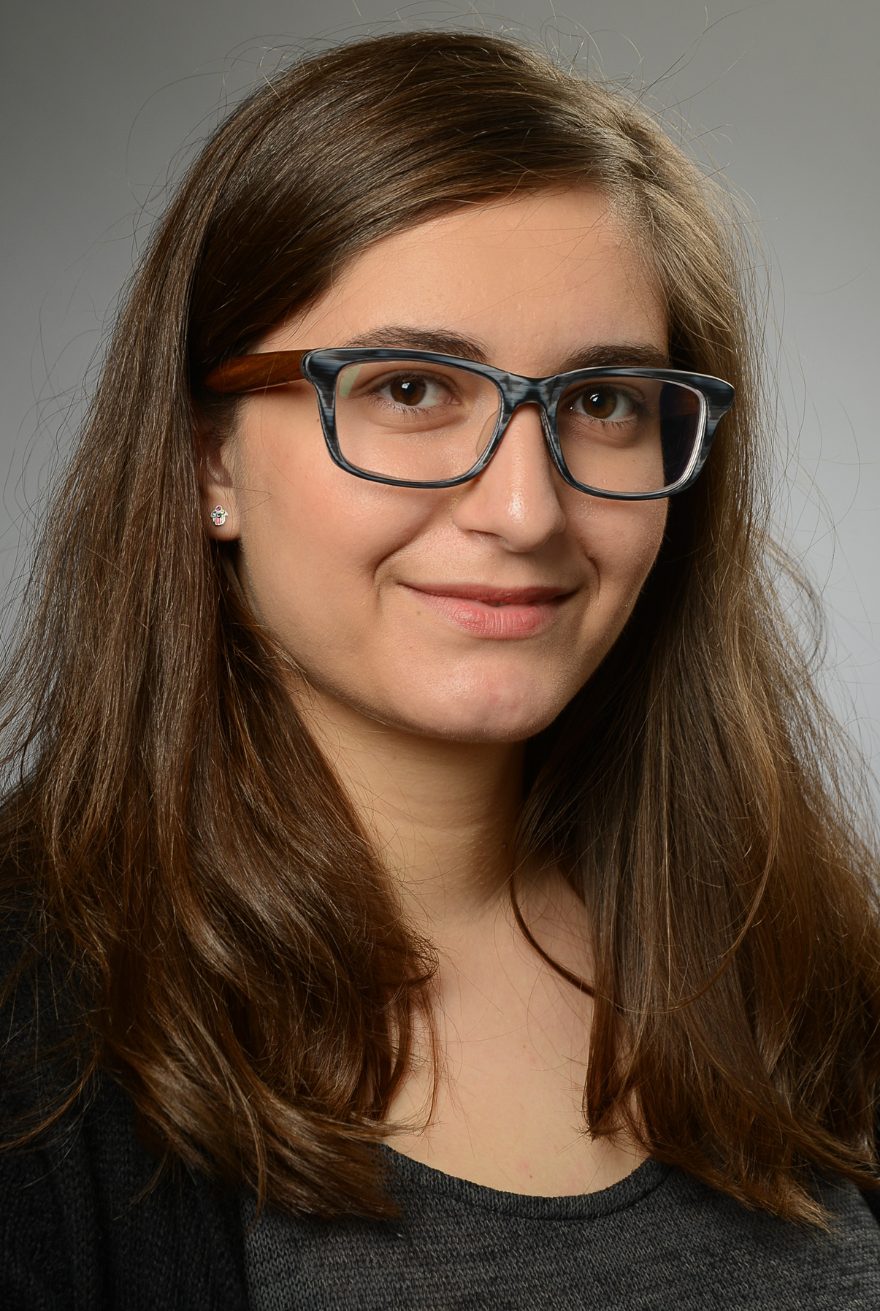
Ariadni Apostoleri
I turn “it’s somewhere in an inbox” into a system the whole company trusts.
At Bayer CropScience, a global product-safety process ran entirely on email. No shared view, no numbers anyone trusted, decisions made half-blind. I rebuilt it into a Power BI environment that 100+ people across five regions now use every day, and case turnaround roughly halved. I own that whole arc: the messy requirements, the build, the rollout, and the part most people skip, getting humans to actually use the thing.
Work experience
Education
Education
Work experience
I work across the whole lifecycle, not just the dashboard at the end. I sit with the people doing the work to find out what actually matters, turn that into KPIs and requirements, build the reporting, coordinate the releases, write the documentation, and train the people who'll use it. I treat adoption as part of my job, not someone else's. A dashboard nobody opens is a failure, however good it looks.
I came to this from chemistry. An M.Sc., years in the lab, and somewhere along the way I realised the part I loved wasn't the experiment, it was building the systems that made the work make sense to everyone else. Regulated, evidence-heavy environments are where that instinct earns its keep.
Assessing the safety of third-party crop-protection products was a global job run on email and scattered spreadsheets. Dozens of scientists, several regions, high-value decisions, and no reliable way to see how much was in the pipeline, what stage things were at, or where they got stuck. Leadership was making calls in the dark.
I owned it end to end. I worked out the KPIs that actually mattered, cycle time, regional workload, where approvals bottlenecked, and built the Power BI environment on SQL-backed data, with views shaped for scientists, regional managers, and leadership so each saw what they needed and nothing they didn't. I coordinated delivery of the supporting Power Apps tool with an external development team across 10+ release cycles, built a SharePoint hub so the process and its rules lived somewhere other than people's heads, and led a 90-day cross-functional push that cut out a step two teams had been doing twice.
Sample data, real interaction. Toggle the view; hover for tooltips.
More than 100 people across five regions adopted it, voluntarily, within six months. Case turnaround fell from six-to-eight weeks down to three-to-four once the delays were finally visible enough to fix. In one case a team in Latin America settled in about a week a regulatory question that would once have taken two months, because the dashboard showed them a colleague in China had already cracked it. An adjacent team liked it enough to ask for their own.
She consistently excelled at turning complex matters into practical, workable solutions.
Dr. Martina Preu, Global Head of Human Safety, Bayer CropScience. From my German employment reference (Zeugnis), the highest rating possible. Full reference available on request.
I get into a process with the people who run it, separate what's important from what's just noisy, and turn it into clear KPIs, requirements, and a redesign worth building.
Power BI, DAX, and dashboards designed for the person reading them, not for showing off. Validated numbers, drill-downs that make sense, and views tailored to each audience.
I coordinate releases, run UAT, write the documentation, and train the users. I measure success by whether people rely on the thing months later, not by whether it launched.
A scientist's training and four working languages, put to work translating between the people who generate data and the people who decide with it. That gap is where most reporting quietly dies.
My Bayer reference documents something most candidates can only claim: that I use AI to speed up technical work and raise its quality. I work daily with LLMs like ChatGPT and Claude, and I connect them to my tools and data through MCP, so the model works inside my actual workflow instead of a separate chat window. I use that to move faster on DAX troubleshooting, documentation, and dashboard iteration, and to pressure-test my own thinking. The business logic, the interpretation, and the final call stay mine.
Chemistry taught me to work carefully with messy evidence: question the assumption, check the number, write down why. That's exactly the temperament regulated work rewards, in life sciences, pharma, chemicals, quality, and anywhere reporting has to be accurate, traceable, and defensible. I know GxP-governed environments from the inside. It's the setting where I'm most useful, though the way I work travels well beyond it.
I kept gravitating to the same thing: building the systems around the work so it could be trusted, found, and acted on. Here is that thread, from the lab to enterprise reporting.
The foundation: rigorous, evidence-driven scientific work.
Started building the systems around the science. I replaced paper lab journals with electronic ones and structured SOPs, commissioned and documented new analytical and laboratory instruments from scratch (procurement to operating manuals), digitised exam workflows on a no-code platform, and coordinated the relocation of three chemical laboratories.
Selected as my team’s most experienced person with the university’s no-code education platform, I built exam and exercise pools with automated evaluation, designed to last.
The same instinct became a full enterprise Power BI environment for a global regulated workflow, combining chemistry domain knowledge, process design, and multi-region stakeholder delivery.
Preparing for PL-300 (exam Q3 2026), sharpening SQL, and looking for the right team.
I worked entirely in German at Bayer and TH Köln, coordinated with Spanish-speaking teams in LATAM, and reported to international leadership in English. The languages are part of how I operated as a central contact across regions, not a footnote.
I ramp quickly and teach myself: my Bayer reference notes that I independently and systematically expanded my skills beyond what the role required. I'm doing the same now with SQL and PL-300.